Those of you who read the february issue of the Dive Magazine might already know this, as I got to tell “what happened to me” in there. To all the others, here you are:
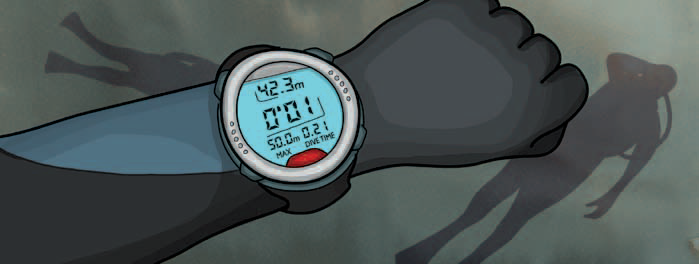
Pushing your maximum depth may seem adventurous. But I found out it isn’t big and it certainly isn’t clever
People new to diving often ask about your deepest dive.
I’ve started using this as an opportunity to explain not how amazing the dive was, but what I learned from it, and why I’d never do it again, why you should never exceed the depth limits of your diving qualification or the depth you feel comfortable with.
It was a cloudy July afternoon and five of us decided to go diving. Jim and Lisa had done the same diving course as me, but while Jim and I had received our certification, Lisa still had to demonstrate one skill to complete the course. Luke had been diving for about a year and Tony was our instructor.
We decided to try a new dive site near our home in Germany. We arrived and put on our gear. We decided to dive in one big group: Tony buddied with Jim and Lisa; me and my close friend Luke followed them. From among the newbies, I was picked not to dive with Tony, because I had the most experience – it was my 75th dive.
Our first dive took us just below 50m. My training qualified me to dive to 20m, and the next course I was about to start would involve diving as deep as 40m, with an instructor. But Lisa hadn’t even finished her first course. I must admit that I don’t remember much from the dive. As I’m generally fascinated by how our minds work slower underwater, I always try to calculate easy things, like ‘6×7’ when I dive. I did that then, and I didn’t feel I was any slower than usual.
Back on shore, Tony asked if we wanted to go for another dive. Lisa didn’t feel well and hadn’t enjoyed the first dive. Looking back, I have to say she was clever. And strong. It’s hard to say ‘I’m out’ if all your friends want you to join them. We decided to stick to our positions, so Jim and Tony were ahead, Luke and me behind. At about 40m I stopped looking at my computer. I felt everybody began to dive faster, and I didn’t want to lose them. I had no clue
where we were or how exactly I would get back out. I calmly came to the conclusion that I had to follow my friends. I didn’t want to be accused of wrecking their dive, but I was also afraid they wouldn’t listen to me.
Suddenly, I realised Jim was dangerously low on air. He only had 50 bar left in his 12-litre tank and we’d been trained to end the dive with 50 bar, not to use it up. So Tony gave Jim his alternate air source.
Today, I can’t clearly remember whether we started to ascend right away or went a few metres deeper, but I did see Luke still descending when Jim and Tony started going up. As he was just looking at his computer, it was pretty obvious to me what he was trying to do: hit a depth record.
By then, I was frozen (only Tony, was in a drysuit) and glad we were going back. I had started to dislike the dive as I felt I had no control over it and realised I was putting myself and others at risk. None of the computers showed deco stops, but we did an extended safety stop anyway.
Jim, Tony and Luke had loved the dive.
At least, that’s what they told everybody. It happened only a little more than a year ago, but now it all feels so awkward, wrong and thoughtless. I didn’t know anything at the time, but I’m changing that by getting more training and qualifications. Plus, I always pay attention to where I’m diving and who I dive with. I look at maps of a new dive site before I go there, because I want to be able to find my own way around. More importantly, I talk to my buddies about what exactly we’re going to do: how deep are we going? How long for? Which direction are we going? That way I can make an informed choice to do the dive or not and resist pressure from friends to push my limits.
 divemone